Client and matter onboarding shouldn’t be the slowest part of running a modern law firm.
And yet, in many mid-sized UK firms, client intake is still handled through:
Email threads
Spreadsheets
Manual AML triggers
Document templates
Rekeying data into the PMS
It works. Until it doesn’t.
If your firm is serious about improving turnaround times, reducing compliance risk and protecting fee earner capacity, legal client intake automation isn’t a future project. It’s operational infrastructure.
This guide covers:
How law firms typically handle client onboarding
Where risk and inefficiency quietly build
What good client intake automation actually looks like
Common mistakes to avoid
How to evaluate onboarding software properly
What Is Legal Client Intake Automation?
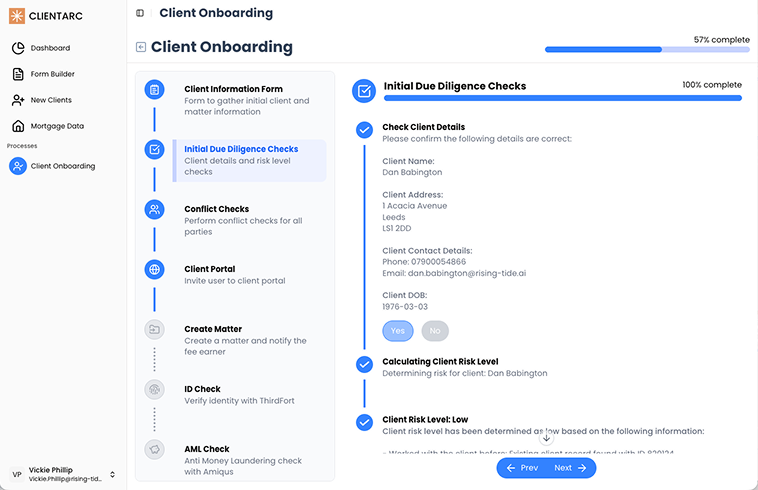
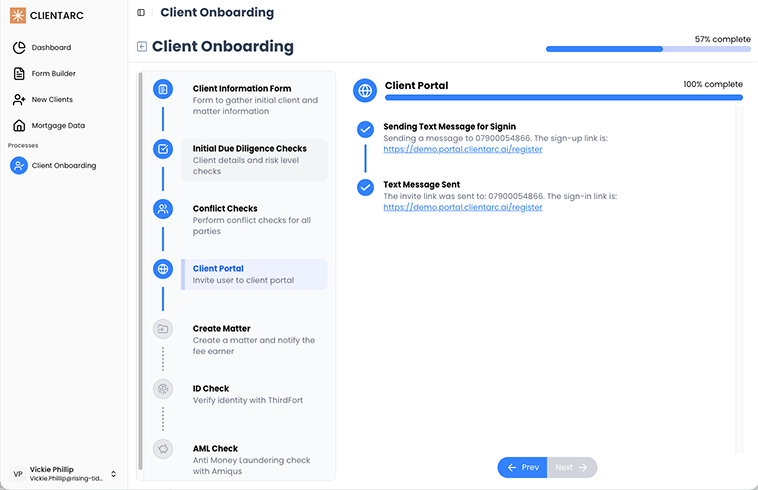
Legal client intake automation is the structured use of technology to automatically:
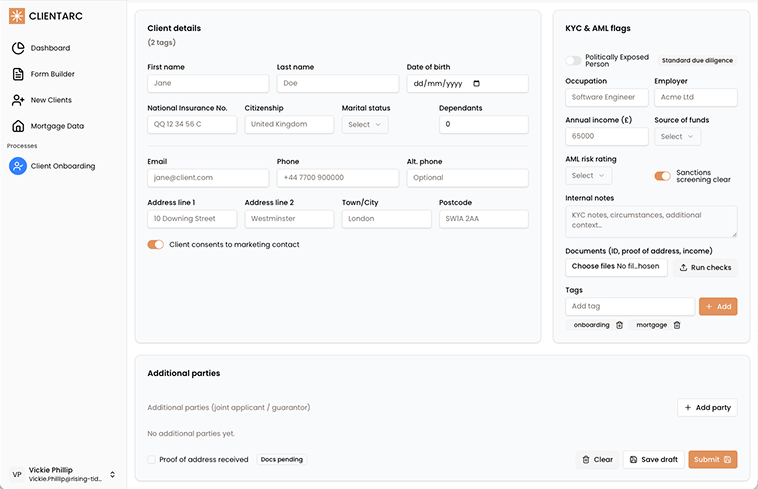
Capture new client and matter enquiries
Trigger AML and KYC checks
Verify identity
Generate engagement documentation
Create matters within the practice management system
Assign fee earners
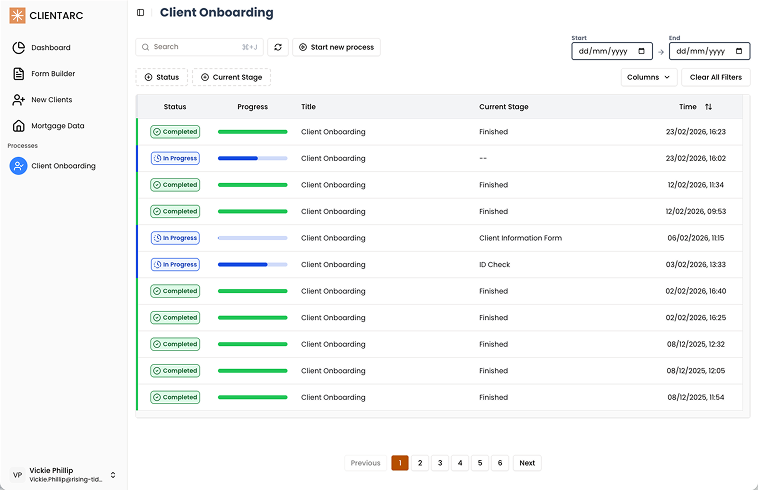
Track onboarding completion
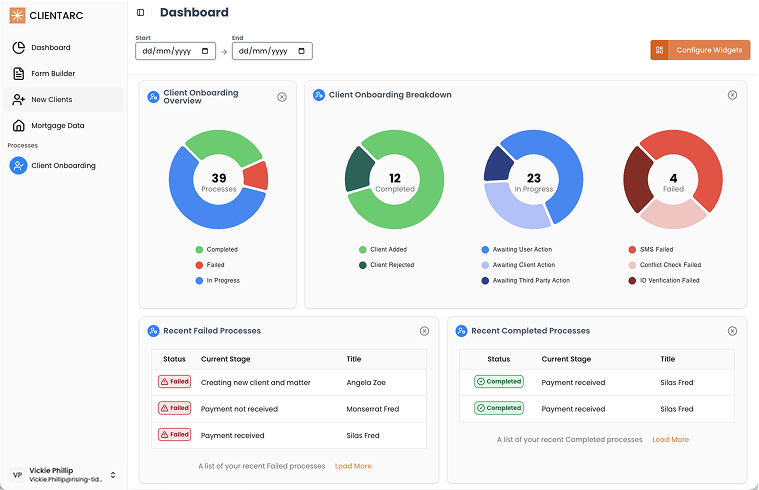
Instead of relying on manual oversight, automation creates a connected, auditable workflow from first enquiry through to compliant matter setup.
For UK law firms under increasing regulatory pressure, automation isn’t about convenience. It’s about control.
How Most UK Law Firms Handle Client Onboarding Today
Email-Led Intake
Referrals arrive.
An admin logs details manually.
Compliance checks are triggered separately.
Documents are prepared.
Matter setup requires rekeying.
This approach depends heavily on individual diligence.
And it doesn't scale.
Spreadsheet Tracking
Some firms improve visibility with shared trackers or workflow boards.
Better oversight.
But still fragmented.
Data is duplicated.
Compliance steps rely on memory.
Systems don’t truly connect.
Partial Automation
Some firms use digital ID verification tools or online forms.
But if the process breaks between enquiry, compliance, document generation and PMS setup, it’s not true intake automation.
Disconnected automation still creates admin.
Manual client onboarding affects more than admin time.
Fee Earner Capacity
Lawyers waiting for onboarding clearance are not billing.
Compliance Exposure
Missed AML triggers. Incomplete data capture. Inconsistent audit trails.
It only takes one oversight.
Client Experience
Modern clients expect digital onboarding. If engagement feels slow or unclear, confidence drops early.
Leadership Visibility
Without structured intake data, firms lack:
Accurate pipeline reporting
Conversion tracking
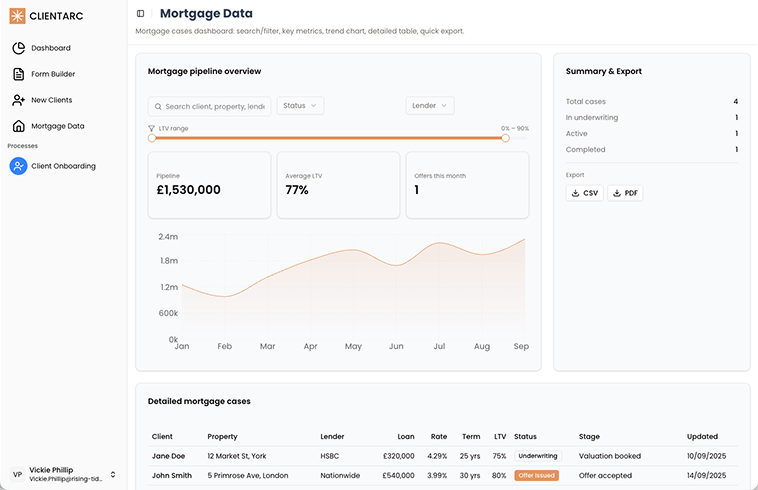
Bottleneck insight
IS YOUR CLIENT ONBOARDING PROCESS DEFENSIBLE?
Most firms complete onboarding correctly. The question is whether the process would withstand regulatory scrutiny or increased volume without strain. If compliance relies on manual triggers or quiet rekeying behind the scenes, risk isn’t always visible.
Our research – conducted with YouGov across 165 senior UK legal professionals – found that 36% of firms cite uncertainty and risk as their single biggest barrier to AI adoption. For most, the issue isn’t intent. It’s process architecture.
Download our practical Client Onboarding Assessment to review your structure objectively.
It removes manual duplication while strengthening compliance control. Designed specifically for mid-sized UK law firms that need automation without operational disruption.
One of our clients, Birchall Blackburn Law, reduced onboarding time by around 50% after bringing all intake routes into a single, unified workflow using ClientArc. Their IT Director noted that regardless of how work came in, every method was now handled within one platform.
Client intake automation is technology that automatically captures new client information, triggers AML checks, generates engagement documents and creates matters in a practice management system without manual data re-entry.
Law firms automate client onboarding to reduce compliance risk, eliminate duplicate data entry, shorten onboarding time and improve fee earner utilisation.
Does client intake automation help with AML compliance?
Yes. Automated onboarding systems can trigger AML and KYC checks automatically, ensuring compliance steps are completed consistently and recorded in an audit trail.
Can client intake software integrate with a practice management system?
Modern legal intake automation software should integrate directly with a firm’s PMS to prevent rekeying and maintain data integrity.