Transcription that gets the details right.
Tran-scription that gets the details right.
Getting transcription right is harder than getting it close.
Speech-to-text technology has improved enormously over the last decade. For a casual meeting, a quick recap or a personal note, the tools available now are entirely sufficient. The challenge starts when the transcript needs to be used somewhere consequential – in a case file, a client record, a briefing document, an audit trail.
That's where the gap between "close enough" and "accurate" starts to matter.
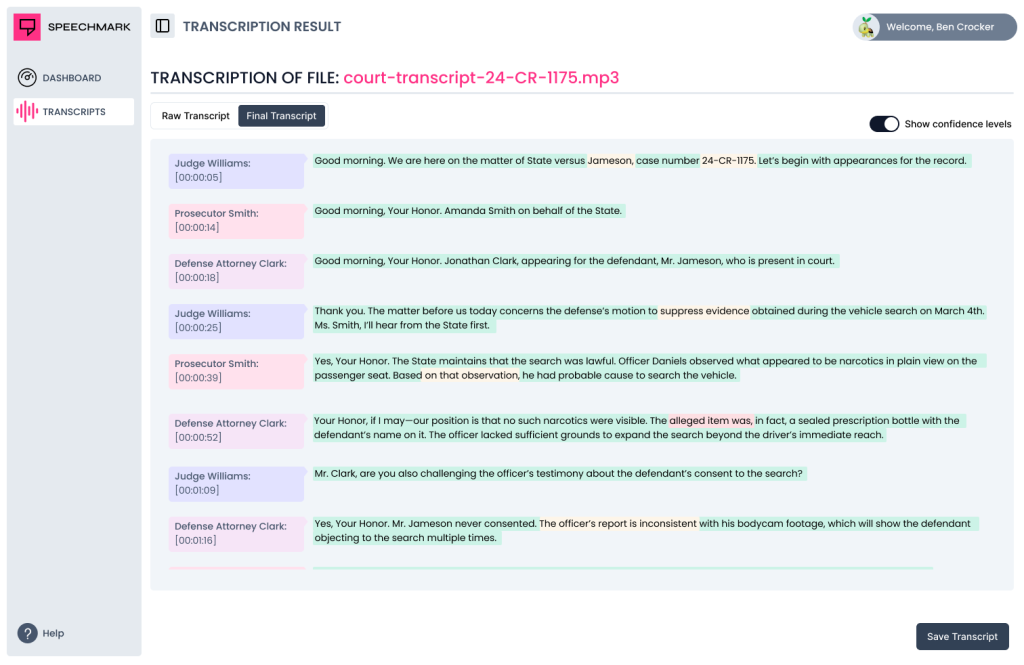
Names need to be spelled correctly. Technical terms need to be recognised, not approximated. References to people, places and matters need to align with how your firm actually records them.
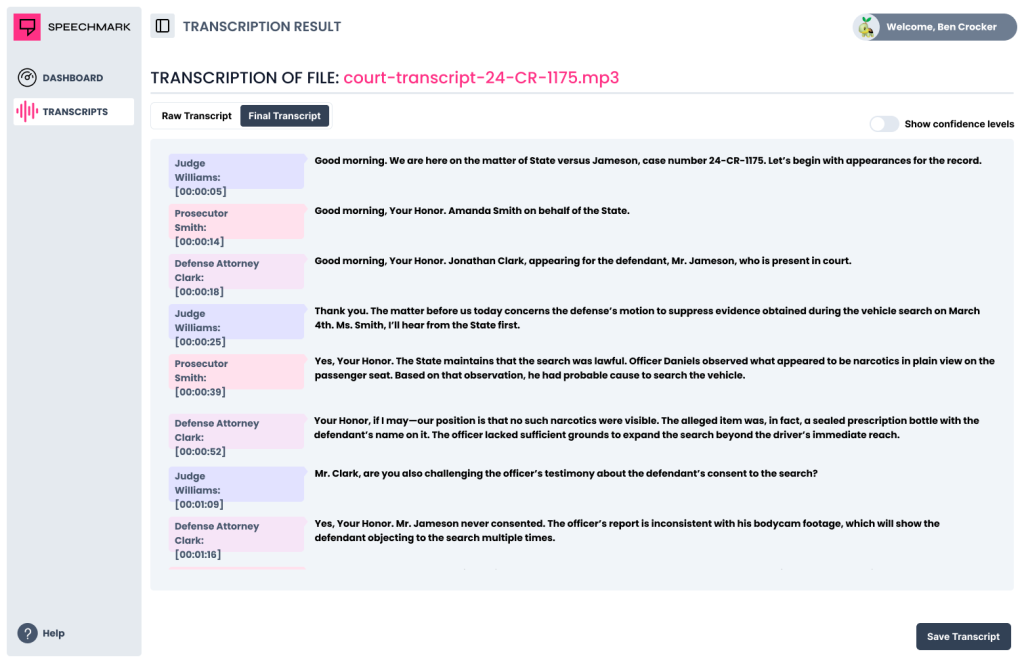
And the output needs to come out structured – speaker-attributed, organised, ready to act on – rather than as text waiting for someone to make sense of it.
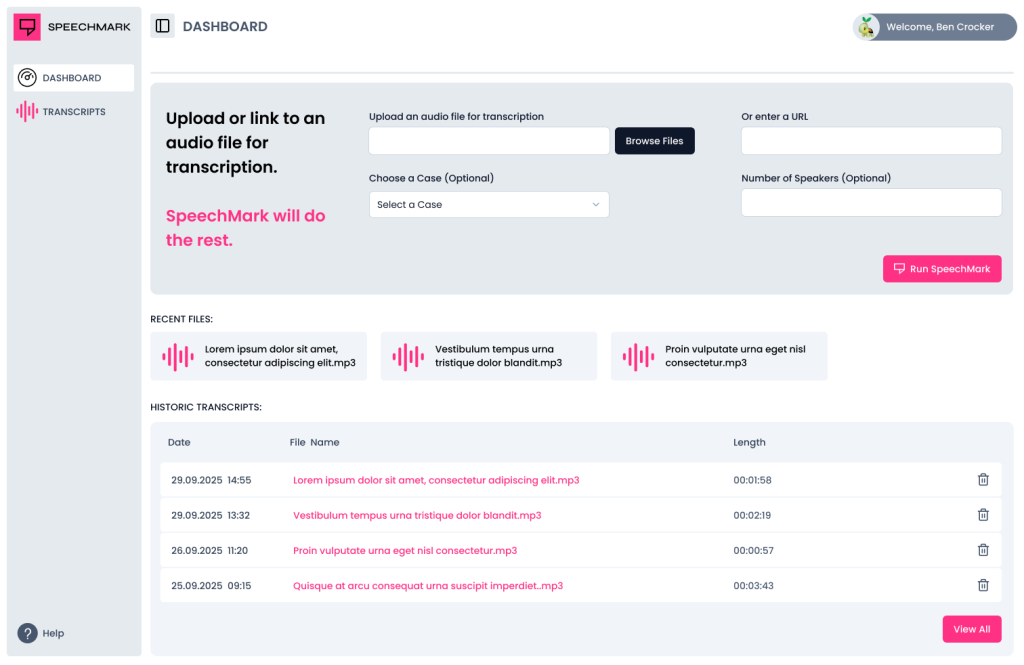
SpeechMark was built specifically for that gap. It captures the conversation, identifies who’s speaking, and uses your firm’s own data to check what’s being said, so that names, references and technical terms come out right the first time, in structured output your team can use without rewriting it.
SpeechMark was built specifically for that gap.
It captures the conversation, identifies who’s speaking, and uses your firm’s own data to check what’s being said, so that names, references and technical terms come out right the first time, in structured output your team can use without rewriting it.
Four stages, from spoken word to structured record.
1
2
SpeechMark recognises individual speakers and segments the conversation accordingly. Who said what, in what order, with the structure of the conversation preserved, so the transcript starts life as an organised record, not an undifferentiated block of text.
3
4
The conversations your team has every day, captured properly.
The conversations your team has every day, captured properly.
What SpeechMark changes, in operational terms.